
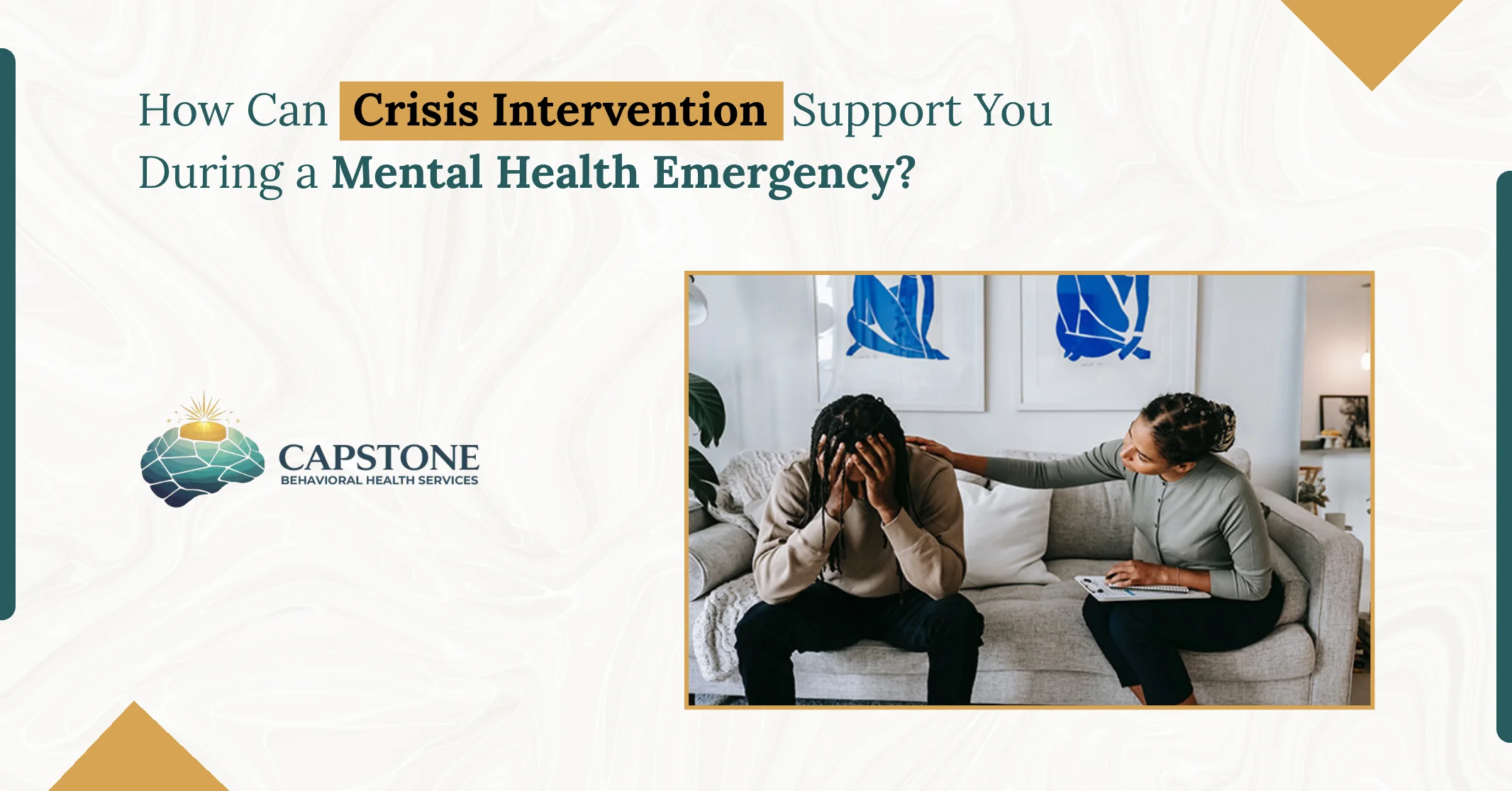
A mental health crisis can be overwhelming. It may bring sadness, anger, confusion, or fear. This leaves the person unsure of what to do. During that tough time, you can get help. One option is crisis intervention.
Crisis intervention is immediate help given to a person who is in crisis. It can soothe the person and help them feel less anxious. It can also come in handy in helping them take one step further.
We treat others with kindness and respect at Capstone Behavioral Health Services. We serve all age groups. We value the fact that everyone is heard, feels safe and is cared for.
What Crisis Intervention Means
Crisis intervention is help for a very hard time. It is used when a person cannot wait for help later. It focuses on the most urgent need first.
It may help when a person:
- Feels very upset
- Feels panic or fear
- Talks about hurting themselves
- Cannot think clearly
- Feels like they cannot cope
- Needs help right away
The main goal is safety. After that, the person can get more care and support.
Why Crisis Help Matters
A mental health crisis can occur unexpectedly. It can happen at home, at work, or with family. It can seem overwhelming all at once.
Crisis intervention matters because it can:
- Lower fear
- Bring calm
- Keep the person safe
- Show clear next steps
- Connect the person to more help
Sometimes, just one calm talk can make a big difference.
How We Help at Capstone Behavioral Health Services
At Capstone Behavioral Health Services, we use a caring approach. We listen first. We do not judge. We invest effort in grasping the individual’s requirements.
During a crisis, we may:
- Talk in a calm voice
- Listen carefully
- Help the person share feelings
- Look at safety needs
- Make a plan for what comes next
We know every person is different. That is why we give care that fits the person and their story.
Signs That a Person May Need Help
Some crisis signs are easy to see. Some are not. It helps to know what to watch for.
A person may need crisis support if they:
- Talk about giving up
- Cry a lot
- Feel very scared
- Stop sleeping well
- Stop eating well
- Pull away from others
- Act in unsafe ways
If these signs happen, getting help soon is important.
What Happens During Crisis Intervention
The first step is often a calm talk. We want to know what is happening right now.
During crisis intervention, we may:
- Ask simple questions
- Help the person slow down
- Talk about what caused the stress
- Check for safety
- Find the next step of care
We take one step at a time. We do not rush. We focus on what the person needs most in the moment.
How Our Other Services Help Too
Crisis intervention is only one part of care. After the hard moment passes, other services can help a person keep moving forward.
Psychiatric Evaluations
A psychiatric evaluation helps us learn more about a person’s mental health. It helps us understand what kind of care may help most.
Medication Management
Some people may need medicine as part of their care. Medication management helps us watch how it is working and make changes if needed.
Supportive Psychotherapy
Supportive psychotherapy gives a person a safe place to talk. It can help them feel stronger and more steady after a crisis.
Telehealth Visits
Some people feel better getting care from home. Our telehealth video visits make care easier to reach.
Follow-Ups
Follow-up visits help us check in. They help us see how the person is doing after the crisis.
Collaborative Treatment
We work together with the person and, when needed, their support team. This helps make a care plan that fits real life.
Flexible Scheduling
Life can be hectic and challenging to navigate. Flexible scheduling helps people get care at times that work better for them.
How Crisis Support Helps Families
A mental health emergency can affect the whole family. Loved ones may feel scared or unsure. They might wish to assist but are uncertain about the way to do so.
Crisis intervention can help families by:
- Explaining what may be happening
- Showing how to stay calm
- Giving simple steps to follow
- Helping them support their loved one
- Connecting them to more care
When families feel less confused, they can help more.
Why Kindness Matters
A person in crisis needs more than words. They need care that feels human. They need someone who listens and cares.
At Capstone Behavioral Health Services, we value dignity and empathy. We want every person to feel safe and respected.
People often heal better when they feel:
- Heard
- Cared for
- Safe
- Respected
- Supported
Kindness can help a person feel brave enough to ask for help.
Moving Forward After a Crisis
A mental health emergency can feel very big. But it does not last forever. With the right care, things can get better.
After a crisis, a person may need:
- A care plan
- Therapy
- Medicine, if needed
- Follow-up visits
- Ongoing support
Healing can take time. Small steps are still good steps. A little progress matters.
Final Thoughts
Crisis intervention may help you during an emergency of mental illness, it can provide quick assistance, calm, care and direction. It can make someone feel better and less isolated.
At Capstone Behavioral Health Services, we help with crisis intervention. We also offer evaluations and therapy. We treat everyone with empathy and respect.
FAQs
Q. What happens in a crisis visit?
We talk, listen, check safety, and help plan the next step.
Q. Can crisis help make me feel calmer?
Yes. It can help you feel safer, calmer, and less alone.